Last updated 2026-08-21
TL;DR
A grease trap (or interceptor) is a tank that holds kitchen wastewater long enough for fats, oils, and grease to float so they do not clog the sewer. Federal pretreatment rules ban discharges that obstruct a POTW. Cities add hauler licenses and pump-out manifests. Start with an EIN, a local waste-hauler permit, a disposal outlet, and confined-space safety. Confirm every fee with the local board. Nobody issues a single national grease trap license.
What is a grease trap?
A grease trap is a tank on a kitchen drain that slows wastewater so fats, oils, and grease (FOG) float and food solids settle, instead of coating the public sewer. Food service kitchens use them. Cities require them because FOG blocks pipes and can push sewage out of manholes.
People say grease trap for two different boxes. A small indoor unit under a three-compartment sink is usually a hydromechanical interceptor. A big outdoor concrete vault is a gravity grease interceptor. Your permit will use one of those words. Use that word back.
Why it exists is not a health-department mood. It is a Clean Water Act pretreatment problem. 40 CFR 403.5 bans "Solid or viscous pollutants in amounts which will cause obstruction to the flow in the POTW resulting in interference." [1] That one sentence is why a city can shut a restaurant drain and why a hauler permit exists at all.
The National Pretreatment Program is how EPA and approved states make commercial users keep junk out of publicly owned treatment works. [2] FOG is the food-service version of that duty. The trap is the hardware. Pumping, manifests, and disposal are the paper path.
FDA Food Code 5-402.12 is blunt: "If used, a GREASE TRAP shall be located to be easily accessible for cleaning, operation, and maintenance." [3] If you cannot open it, you cannot service it. That is the job.
I would not buy a chemistry pitch that claims a trap never needs pumping. Emulsifiers often just shove grease to the next manhole. Plenty of city FOG ordinances ban those products outright. Read the local rule before you sell a bottle.
How do you start a grease trap business?
You start by choosing pumping, installing, or both, then you build the license stack that matches that choice. Installing is plumbing work. Pumping is liquid-waste hauling. Most new operators should pick one. There is no federal grease trap business license.
Form an entity your state recognizes. Get a free EIN from IRS if you need one. [8] Register the business where your city and the SBA checklist say you must. [14] Then stop. The real gate is not the LLC stamp. It is the hauler permit and a legal place to take the load.
Lock disposal before you print door hangers. Renderers, some POTWs, and licensed transfer stations take grease trap waste. If you cannot name the outlet, you do not have a business. California treats inedible kitchen grease as its own transporter registration under the Food and Agricultural Code. [9] Texas makes grease trap waste transporters register with TCEQ under 30 TAC 312.142. [10]
Buy or lease a vacuum truck that matches the tank and decal rules on your route. If GVWR is 26,001 pounds or more, 49 CFR 383 puts you in commercial driver's license territory. [12] Confirm weight on a scale, not in a comment thread.
Then pull every city FOG or liquid-waste permit for the stops you want. Paper is local. The Alabama path is not the California path. Read how to start grease trap in Alabama or how to start grease trap in California before you assume a form travels.
Insurance comes next: commercial auto, general liability, and pollution coverage. Confined-space rules apply if anyone enters a vault. [5] Most pump jobs should stay outside the tank. Year one is boring on purpose. Permits, outlet, truck, manifests, then a small route.
What paper do you actually need in year one?
You need an entity record, an EIN if you have employees or a multi-member setup, a local business license, each city's waste-hauler or FOG transporter permit, vehicle decals if the board issues them, disposal receipts, and a manifest for every load. Confirm the exact list with the pretreatment coordinator. Do not trust a national checklist.
I keep a folder per city. One ordinance, one application, one fee page, one inspector name. Fees change. I will not invent them here. If a blog quotes a nationwide hauler fee, ignore it.
Restaurants need their own file too: interceptor as-builts, a pumping contract, and the last manifest. You will get blamed when their folder is empty. Bring a copy of the ticket to the manager the same day.
Some states add a layer. California IKG registration sits on top of city FOG rules. [9] Massachusetts Title 5 adds grease-trap design duties for systems that are not even on a city sewer. [4] Arizona hides the stamp in a different office than Alabama. See grease trap license in Arizona if that is your map.
Waste of money in year one: a custom app, a trademark lawyer, and any national grease trap certification that your permit application does not name. Spend it on dump tickets and a spare hose.
Want the forms in one binder? GreaseTrapPath (an independent publisher, not a law firm and not a hauler) sells a $199 one-time Interceptor + Manifest Kit. You can also build the same file straight from the city PDF.
Is a grease trap the same as a grease interceptor?
No. In the field, trap usually means a small indoor hydromechanical unit rated in gallons per minute. Interceptor usually means a large outdoor gravity tank rated in gallons. Codes and sales sheets mix the words freely. Your inspector will not care what the catalog said.
Hydromechanical units use baffles and often an external flow control. They sit under a sink or in a floor well. Gravity interceptors give FOG time to rise in a large vault. Massachusetts Title 5 requires a minimum capacity of 1,000 gallons and a minimum depth of four feet for commercial grease traps on Title 5 systems. [4]
Size by seat count off a forum and you will undersize a wok line and oversize a sandwich shop. Use the fixture-flow method in the plumbing code the city adopted, then ask the plumbing official. I would not sell a 20 gpm box for a hotel banquet kitchen.
| Type | Typical place | How it is rated | Who services it |
|---|---|---|---|
| Indoor hydromechanical trap | Under a sink | Gallons per minute | Hauler or plumber |
| Gravity interceptor | Outside, buried | Gallons of volume | Liquid-waste hauler |
| Automatic grease removal unit | Kitchen floor | GPM plus skimmer | Kitchen staff plus hauler |
Who regulates grease traps and FOG haulers?
EPA sets the federal pretreatment floor. Cities and states write the rules you actually fail. 33 U.S.C. § 1317 is the Clean Water Act pretreatment statute. [11] 40 CFR Part 403 is the program regulation. [1] [2] The local POTW (or a state that runs pretreatment) writes the FOG ordinance, the interceptor spec, and the hauler permit.
Health departments care about the Food Code accessibility rule and about backups into a kitchen. [3] Plumbing officials care about the install. Transportation agencies care if your truck needs a CDL. [12] Agriculture departments show up where inedible kitchen grease is a registered commodity, as in California. [9] Environmental agencies show up where grease trap waste is a registered special waste, as in Texas. [10]
Call the pretreatment coordinator at the wastewater utility first. Not the chamber of commerce. Ask three things. Do you permit haulers. What manifest do you want. Which disposal sites do you accept.
For a state-by-state paper path, start with grease trap license in Alabama, grease trap license in California, or how to start grease trap in Arizona. Confirm every fee and form with that board. I do not publish invented processing times.
What does a grease interceptor pump-out actually involve?
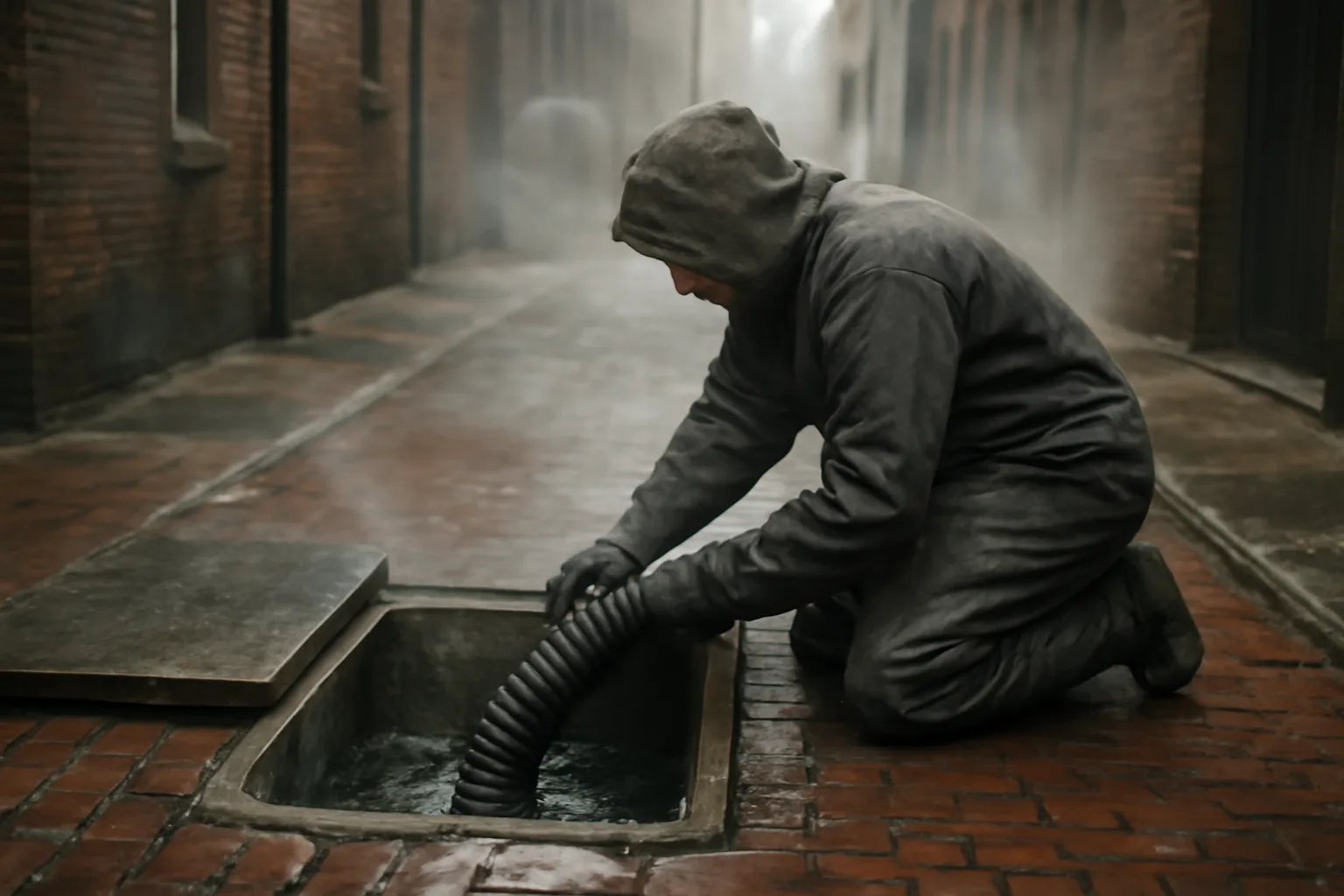
You park, open the lids, measure the grease and solids blanket, pump the entire contents (more than the floating mat), scrape baffles if the permit says so, note defects, leave a manifest, and take the load to the named outlet. Then you close the lids so nobody drops a tire in the vault.
Skim only the top and you lose accounts and fail inspections. Gravity interceptors work when the tank is empty enough for detention time. Leave most of last month's grease and the unit is a decorative manhole.
Stay out of the vault. Permit-required confined space rules in 29 CFR 1910.146 exist because people die in tanks. [5] Hydrogen sulfide and oxygen displacement are the boring reasons. OSHA sets a 20 ppm ceiling for hydrogen sulfide under 29 CFR 1910.1000 Table Z-2. [6] NIOSH lists the IDLH for hydrogen sulfide at 100 ppm. [7]
Photograph the open tank and the ticket. Cities will ask later. If the interceptor is broken (missing baffle, collapsed inlet), write it on the manifest. You are not the plumber unless you are licensed as one.
How often do grease traps need pumping?
As often as the local ordinance and the city's fill-fraction rule require, and sooner if the kitchen is drowning the tank. There is no honest national interval. Ninety days is a common city default. It is not a law of physics.
Massachusetts Title 5 systems use a design standard of 1,000 gallons minimum, not a nationwide pump calendar. [4] Some cities want monthly service on big interceptors. Some want a hauler contract on file even if the interval is quarterly. Read the permit, not a blog.
A sales rep who promises annual service on a small interceptor behind a fried-chicken line is selling you a backup. Measure the blanket. If grease plus solids eat the working volume, pump. I would rather lose an argument about too often than get called at 2 a.m. for a floor drain.
Keep the last year of tickets. Inspectors ask. Managers lose paper. Your file is the restaurant's memory.
What licenses do grease trap haulers need?
Haulers typically need a local (or state) liquid-waste or FOG transporter registration, a business license, vehicle identification, and a driver who is legal for that truck's weight. Installing interceptors is a separate plumber or contractor license. Confirm both stacks. Do not assume one card covers both.
Texas registers grease trap waste transporters under 30 TAC 312.142. [10] California registers inedible kitchen grease transporters in the Food and Agricultural Code. [9] Plenty of cities run their own FOG hauler lists even when the state is quiet. Alabama and Colorado are not copies of each other. See grease trap license in Colorado and how to start grease trap in Alaska.
If the truck's GVWR is 26,001 pounds or more, or you tow the wrong combination, 49 CFR 383 is in play. [12] Confirm with those rules and your state DMV. I am not going to guess your axle weights.
Nobody has a clean national count of how many cards you need. The closest honest answer is one per jurisdiction that touches the truck, the load, or the disposal site. Call each board.
What safety rules apply when you open a trap?
Treat the vault as a confined space you do not enter. 29 CFR 1910.146 is the OSHA permit-required confined space standard. [5] Opening a lid to drop a hose is not the same as climbing in. Climbing in is how this work kills people.
Hydrogen sulfide can sit over decomposing grease. OSHA sets a 20 ppm ceiling for hydrogen sulfide in Table Z-2. [6] NIOSH sets the IDLH at 100 ppm. [7] If the air smells like rotten eggs and then the smell vanishes, that is not cleared. That can be olfactory fatigue. Back up. Ventilate. Do not be a hero for a cheap pump-out.
Other real hazards: slip on grease, alley traffic, a lid that smashes fingers, splash in the eyes. PPE is gloves, eye protection, boots you can wash, and high-visibility clothing if you are in a driveway. A gas meter earns its keep. A camera inside the tank does not.
If your crew will enter interceptors for repairs, you need a written confined-space program, attendants, and a rescue plan that is not "we will figure it out." Most first-year pumpers should refuse entry jobs.
How much does it cost to start a grease trap route?
The truck dominates the number. Permits and an EIN do not. I will not invent a national startup total because cities price hauler permits differently and used vacuum trucks move with diesel markets. Confirm every fee with the board that invoices you.
Budget buckets that are real: entity filing (state-specific), EIN (free from IRS), [8] local business license, FOG or liquid-waste permits per city, insurance down payment, a legal disposal account, hose and fittings, and the truck. Some outlets charge tipping. Some buy yellow grease and still charge for brown grease. Ask in writing.
Used vacuum trucks can be a bargain with hidden tank rust. New trucks can wipe a first-year margin. I would buy a boring used truck with a clean tank inspection and a written disposal contract before I bought wrap lighting.
Skip the warehouse. Skip the second employee until the route is full on paper. Labor and tipping will surprise you more than the LLC fee. If someone quotes a single average grease trap business startup cost without naming the city and the truck year, they made it up.
Where does the grease go after you pump it?
It goes to a facility that is allowed to take grease trap waste. That is usually a renderer, a grease-processing plant, a transfer station, or a POTW that publishes acceptance rules. It does not go into a storm drain, a ditch, or a mixed-trash roll-off.
Trap waste (brown grease, water, and food solids) is not the same as fryer oil (yellow grease). Do not commingle them unless the outlet said you may. Yellow grease has a recycling market. Brown grease is a disposal problem with occasional processing. Prices flip. Your contract matters more than a spot quote.
Is it hazardous waste? Typical kitchen FOG is not a listed hazardous waste. Characteristic hazardous waste is a lab question under 40 CFR 261 if someone dumped solvents or shop waste into the interceptor. [13] If a load smells like degreaser and not like a fryer, stop and ask the outlet. Guessing is how you buy a cleanup.
Get a disposal ticket that matches the manifest gallons. Cities reconcile those two numbers when they feel like being difficult.
What records and manifests do boards actually ask for?
They ask for who generated the waste, who hauled it, the volume, the date, the vehicle, and where it was unloaded. That chain is the manifest. Some cities print the form. Some accept your ticket if the fields match. California IKG rules are pickier than a small-town utility. [9]
Keep copies the way the ordinance says (paper, portal, or both). I keep them longer than the minimum. When an inspector shows up two years later, "the restaurant lost it" is not a defense if your name is on the interceptor.
Photograph gauges and open tanks. Note broken baffles. Note if the manager refused a full pump. Your future self will need that sentence.
Training notes for drivers, insurance certificates, and the current permit sticker belong in the cab. So does the disposal outlet list. If a city changes accepted sites, your glove-box PDF is stale.
Build this file even if you never buy a kit. The kit is optional. The file is not.
What should you skip in the first year?
Skip a second truck. Skip enzyme contracts you cannot defend under the local FOG ordinance. Skip entering vaults. Skip bidding a whole school district before you have one working city permit and one outlet that answers the phone.
Skip national myths. There is no single grease trap board. There is no secret EPA number that replaces a city hauler card. 40 CFR 403 is a pretreatment floor, not your application form. [1] [2]
Skip hiring a marketing shop before you can service a Friday night overflow. One kitchen manager who did not flood will send more stops than a reel.
Do the dull work. Confirm the board. Pump the whole tank. File the ticket. If you want the forms bundled later, the Interceptor + Manifest Kit is on /start. The reference above still works if you never click it.
Frequently asked questions
What is grease trap?
A grease trap is a plumbing tank that intercepts fats, oils, and grease from kitchen wastewater before the sewer. Small indoor units are often hydromechanical. Large outdoor tanks are gravity interceptors. Cities require them so FOG does not obstruct a POTW, which 40 CFR 403.5 prohibits. The Food Code also requires the unit to stay accessible for cleaning.
How do you start grease trap?
Pick pumping or installing first. Those are different license stacks. Form an entity, get an EIN if you need one, and register locally. Then lock a legal disposal outlet and apply for each city's liquid-waste or FOG hauler permit. Add a legal truck, insurance, and a manifest habit. Confirm fees with the board. There is no national grease trap license.
Do I need a plumber license to pump grease traps?
Usually no, if all you do is pump and haul. Pumping is liquid-waste work. Installing or altering the interceptor is plumbing or contractor work. Some cities blur the line if you scrape baffles or replace parts. Ask the plumbing official and the pretreatment office in the same week. Do not guess from a neighboring county.
How often should a restaurant pump its grease trap?
As often as the local FOG ordinance says, and sooner if grease and solids eat the working volume. Ninety days is a common city default, not a federal interval. Some kitchens need monthly service. Measure the blanket. Keep tickets. An annual promise on a busy fry line is how floor drains fail on a Saturday.
Is used fryer oil the same as grease trap waste?
No. Fryer oil is yellow grease, a recyclable commodity when it stays clean. Grease trap waste is brown grease mixed with water and food solids. Outlets price and permit them differently. Do not commingle loads unless the receiving facility said you may. Your manifest should name the waste you actually pumped.
Can I dump grease trap waste at any wastewater plant?
No. Only facilities that accept grease trap waste, under their own rules and hours. Some POTWs take it. Many do not. Renderers and processors are often the real outlet. Show up unannounced and you will be turned away, or worse, you will create an illegal discharge. Get the acceptance letter before you sell the route.
What is a grease waste manifest?
It is the load ticket that names the generator, hauler, volume, date, truck, and disposal site. Cities use it to prove FOG left the kitchen and landed somewhere legal. Some boards print the form. Some accept your invoice if every field is there. Keep copies longer than the ordinance minimum. Restaurants lose paper.
Do I need a CDL to drive a grease truck?
You need a CDL when the vehicle meets the commercial motor vehicle definition in 49 CFR 383, including a GVWR of 26,001 pounds or more. Many vacuum trucks clear that line. Some smaller units do not. Weigh the truck as equipped. Confirm class and endorsements with your state DMV. Do not trust the seller's verbal maybe.
What size grease trap does a restaurant need?
Whatever the adopted plumbing code and the city FOG ordinance require for that fixture load. Indoor units are often rated in gpm. Gravity interceptors are rated in gallons. Massachusetts Title 5 uses a 1,000 gallon minimum and a four-foot minimum depth on those systems. Seat-count shortcuts fail on wok lines. Ask the plumbing official.
Are grease trap additives a substitute for pumping?
Not if you want the interceptor to keep working and the city to stay off the account. Many FOG ordinances ban enzymes and emulsifiers because they send grease downstream. Pumping removes the mass. A bottle does not. If a vendor claims zero pump-outs, ask them to put that in writing next to the local ordinance section.
What happens if a restaurant skips pumping?
The trap fills, detention time dies, and FOG goes to the sewer or back onto the kitchen floor. Cities can fine the generator, require a pumping contract, or shut the discharge. You, as the hauler, should still refuse a skim-only request and write refusals on the ticket. Overflows are how accounts and relationships end.
Is grease trap waste hazardous waste?
Typical kitchen FOG and food solids are not listed hazardous waste. They can become a RCRA problem under 40 CFR 261 if solvents or other characteristic wastes were dumped into the interceptor. If the load smells like degreaser, stop and talk to the outlet before you offload. Do not guess to save a trip.
Which office do I call first for a hauler permit?
Call the pretreatment coordinator at the wastewater utility that owns the sewers on your route. Ask whether they permit haulers, which manifest they want, and which disposal sites they accept. Then call any state overlay (agriculture for IKG, environmental for special waste). Confirm fees with that board. Do not start with a generic business-license clerk.
Sources
- eCFR, 40 CFR 403.5 National pretreatment standards: Prohibited discharges: 40 CFR 403.5 prohibits solid or viscous pollutants in amounts which will cause obstruction to the flow in the POTW resulting in interference.
- U.S. EPA, Introduction to the National Pretreatment Program (EPA-833-B-11-001): EPA's National Pretreatment Program is the federal framework that requires control of industrial and commercial discharges to publicly owned treatment works.
- U.S. FDA, Food Code 2022, § 5-402.12 Grease Trap: FDA Food Code 5-402.12 requires that if a grease trap is used, it shall be located to be easily accessible for cleaning, operation, and maintenance.
- Massachusetts EEA, 310 CMR 15.000 Title 5 (grease traps, 15.230): 310 CMR 15.230 requires commercial grease traps on Title 5 systems to have a minimum depth of four feet and a minimum capacity of 1,000 gallons.
- OSHA, 29 CFR 1910.146 Permit-required confined spaces: OSHA 29 CFR 1910.146 sets permit-required confined space duties that apply if a worker enters a grease interceptor vault.
- OSHA, 29 CFR 1910.1000 Table Z-2: OSHA Table Z-2 sets a 20 ppm ceiling limit for hydrogen sulfide.
- NIOSH, Hydrogen sulfide IDLH documentation: NIOSH lists the immediately dangerous to life or health value for hydrogen sulfide at 100 ppm.
- IRS, Apply for an Employer Identification Number (EIN) online: IRS issues EINs online at no charge for eligible business applicants.
- California Legislature, Food and Agricultural Code Division 9, Part 3, Chapter 5 (Inedible Kitchen Grease): California's Food and Agricultural Code Chapter 5 regulates transportation of inedible kitchen grease, including transporter registration duties.
- Texas Secretary of State, 30 TAC 312.142 Transporter Registration: Texas 30 TAC 312.142 requires registration of transporters that haul grease trap waste and similar liquid wastes.
- U.S. Government Publishing Office, 33 U.S.C. § 1317 Toxic and pretreatment effluent standards: 33 U.S.C. § 1317 is the Clean Water Act statute authorizing federal pretreatment standards for discharges to publicly owned treatment works.
- eCFR, 49 CFR 383.5 Definitions (commercial motor vehicle / CDL): 49 CFR 383.5 defines a commercial motor vehicle to include vehicles with a GVWR of 26,001 pounds or more, which triggers CDL rules.
- eCFR, 40 CFR 261.3 Definition of hazardous waste: 40 CFR 261.3 defines when a solid waste is a hazardous waste, including characteristic wastes that could apply if solvents are mixed into an interceptor.
- U.S. Small Business Administration, Register your business: SBA instructs new firms to register the business with federal, state, and local agencies as required for that entity type and location.