Last updated 2026-08-21
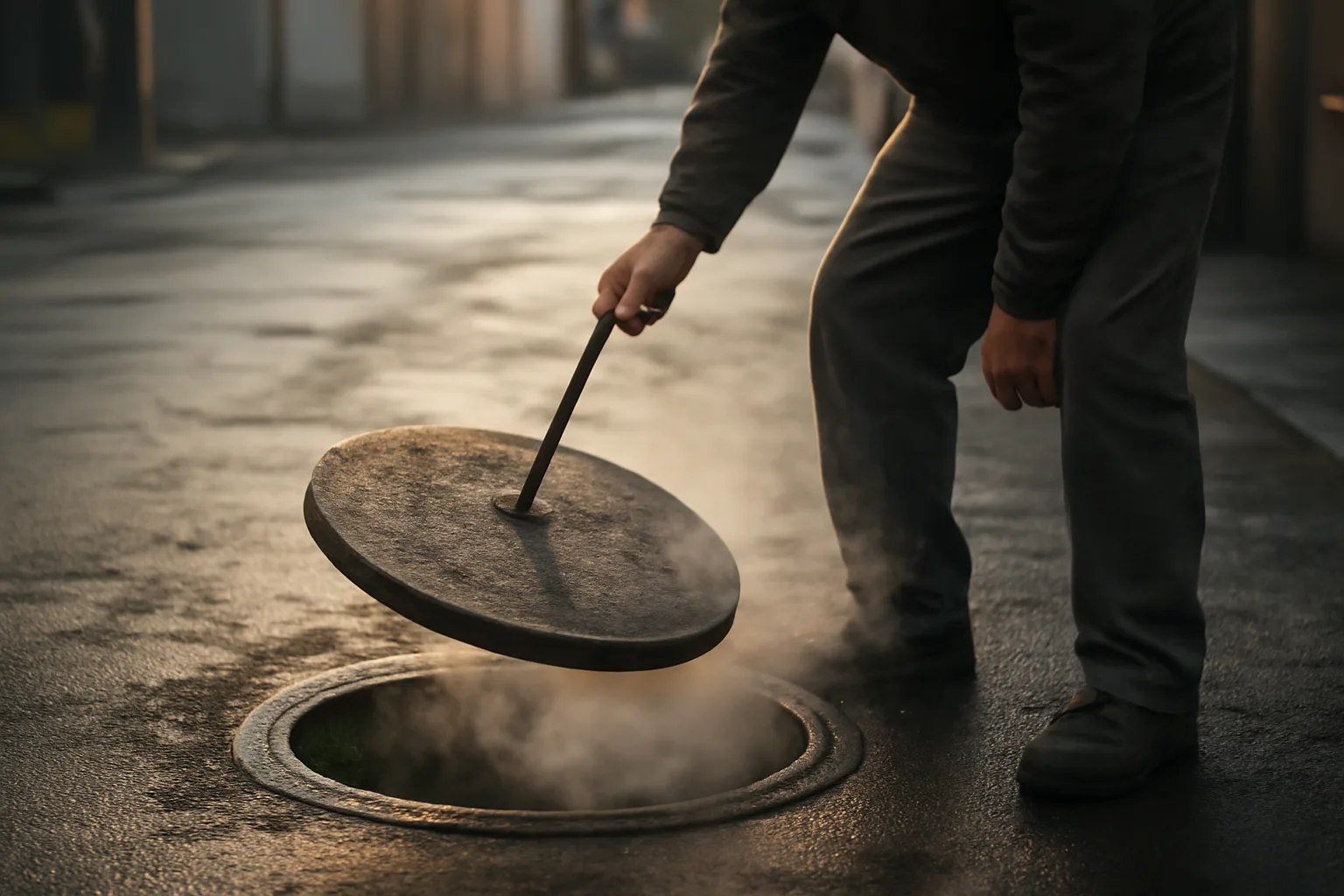
TL;DR
A grease trap is a tank that holds kitchen wastewater long enough for fat, oil, and grease to float instead of coating the sewer. You start with the sewer utility and the plumbing official, pull the install permit, and set a pump-and-manifest routine. Federal rules ban discharges that obstruct a treatment plant. Size, interval, and forms are local. Confirm fees with the board.
What is a grease trap?
A grease trap is a plumbing tank that slows kitchen wastewater so fat, oil, and grease (FOG) can float and food solids can sink, instead of coating the sewer. It is not a filter you forget. It is a holding volume with baffles, and it only works if someone pumps it.
Most people say grease trap for any FOG device. Codes split them. A small hydromechanical unit may sit under a three-compartment sink. A gravity interceptor is a big in-ground tank outside. Both use the same physics. Warm water cools. Grease rises. Water leaves through an outlet that pulls from the clear zone in the middle.
Here is why cities care. Grease hardens in collection lines and causes overflows. The federal pretreatment rule does not create a national grease-trap license. It bans the result. 40 CFR 403.5(b)(3) prohibits "Solid or viscous pollutants in amounts which will cause obstruction to the flow in the POTW resulting in Interference". [1]
EPA's 2004 Report to Congress estimated 23,000 to 75,000 sanitary sewer overflows per year, and that count leaves out backups into buildings. [2] Grease is a common blockage source in those systems. Your trap exists to keep your kitchen out of that mess.
Run a food service shop on a public sewer? Assume you need a FOG device until the utility says otherwise in writing.
How do you start grease trap?
You start by asking two offices the same question: what FOG device do you require for this menu, and what paper do you want before the lid goes on. Call the sewer utility (or the industrial pretreatment group) and the building or plumbing official. Get their FOG packet. Do not order a tank from a catalog first.
Then you size the interceptor to that packet and the adopted plumbing code, pull a plumbing permit (and often a sewer connection or FOG enrollment), install with lids a pumper can open, pass inspection, and sign a contract with a licensed hauler who issues manifests. That is the start path. It is local. There is no federal grease-trap license and no national processing clock.
I'd make the utility call before the equipment call. The expensive mistake is buying a 20 to 50 pound under-sink box when the city wants a 750 to 1,500 gallon gravity interceptor. You will rip it out.
On a public sewer, your legal floor is still the pretreatment program. EPA's 2011 pretreatment manual is the federal explainer for how POTWs keep commercial and industrial waste from disrupting plants. [3] POTWs with a total design flow greater than 5 million gallons per day that receive industrial-user pollutants generally must run a pretreatment program under 40 CFR 403.8. [4] Your restaurant is usually a commercial FOG source under a local ordinance, not a categorical industrial user. The utility can still require the tank, the inspections, and the paper.
Septic changes the start path. Massachusetts Title 5 writes grease-trap inspection and pump-out triggers into 310 CMR 15.230. [5] Confirm with the board of health, not a forum thread.
Write down the inspector's name, the code edition they enforce, and the minimum volume they will accept. That note saves a redo.
How is a grease trap different from a grease interceptor?
People use the words as synonyms. Inspectors often do not. A hydromechanical grease interceptor is compact, often indoor, and rated in gallons per minute or pounds of grease. A gravity grease interceptor is a large-volume tank, usually outside, sized in gallons. A grease recovery device can skim automatically. You still pump the tank.
The International Plumbing Code puts this hardware in Chapter 10. Interceptors and separators are required to keep oil, grease, sand, and other harmful substances out of the building drain and the public sewer. [6]
| Type | Where it sits | How it is rated | Typical use |
|---|---|---|---|
| Hydromechanical interceptor | Indoor, near the sink | GPM or grease capacity in pounds | Small kitchens, if the utility allows it |
| Gravity interceptor | In-ground, outdoors | Gallons of volume | Full restaurants on most FOG programs |
| Grease recovery device | Indoor | Maker rating, still needs pumping | Add-on, not a free pass |
If your city FOG manual says gravity interceptor, an under-sink box will fail inspection. Read the packet.
FDA Food Code 2022 states, "If used, a grease trap shall be located to be easily accessible for cleaning." [7] Lids buried under a new deck are a classic fail. I would not sign a millwork plan that hides the cleanout.
Who actually has to put a grease trap in?
Food service that cooks. Not every office coffee station. If you fry, grill, smoke meat, run a wok line, or wash greasy hotel pans, you are in the net. Coffee-only with no food prep often is not. Confirm anyway.
The trigger is wastewater character, not the name on your business license. A retail shop with a rotisserie still discharges FOG. Grocery delis, school kitchens, hospitals, and churches with commercial dish rooms get pulled in more than owners expect.
Plumbing codes require interceptors when the discharge would harm the sewer. Utilities add FOG enrollment for food service establishments. Some cities list menu types. Some require a new look at change of ownership, even if a tank is already in the ground. Don't assume a used restaurant is skipped.
On septic, state onsite codes can require a grease trap ahead of the septic tank for restaurants. Massachusetts 310 CMR 15.230 is the example I cite because the inspection and 25% pump triggers are written in plain numbers. [5] Other states do the same thing under different chapter numbers. Confirm with the relevant board.
Reheat packaged food in a microwave and nothing else? If the utility puts that in writing, you may dodge a tank. Get the writing.
What permits and paper come first?
A plumbing permit for the interceptor, plus whatever FOG registration the sewer utility runs. Some cities also want an industrial wastewater permit for large kitchens. You may need a street opening permit if the tank sits in the right of way, and a traffic plan if it sits in a drive aisle.
Drawings should show tank location, size, inlet invert, outlet invert, a sample tee if they require one, and truck access for the pumper. After install, keep as-builts. Put the hauler's license number in the same folder.
There is no national fee schedule. Do not trust a blog that lists the US grease trap permit cost. Confirm with the building department and the utility. Processing time is local too. Nobody here will guess your city's clock, and I will not invent one.
I would not start construction on kitchen floor drains until the interceptor location is approved. Moving a poured tank is miserable.
Keep copies. Inspectors ask for the approved plan, not your contractor's text thread. If you want state-colored cost context later, read Grease trap cost in California: what you'll actually pay and Grease trap cost in Alabama: what you'll actually pay. Those still are not your quote.
How do you size a grease trap?
You size it the way the adopted code and the utility formula say, not by what fit in the alley. Common methods are drainage fixture units, peak flow in gallons per minute, seating count, or a gallons-per-meal factor. Hydromechanical units are often sized off GPM with a flow control. Gravity tanks for a full-service restaurant often land at 750 gallons and up, but that is a pattern, not a national minimum. Confirm.
Undersizing passes grease. Oversizing a hydromechanical unit can let solids sit and rot because flow never mixes. Follow the maker and the code together.
Wisconsin's plumbing code (SPS 382) is one state example of interceptor rules sitting inside the plumbing chapter rather than a separate grease license. [8] IPC Chapter 10 is the model many states adopt. [6] If your state adopted the Uniform Plumbing Code instead, the interceptor chapter number differs. Ask which book is in force for this address.
I'd hire a plumber who has passed FOG inspection in that city in the last year. A cheap tank that fails the sample tee test costs more than a correct one.
Menu matters. A bakery with butter cream is not a salad shop. If the formula uses meals per day, use honest covers, not the number you wish you had.
How often do you pump a grease trap?
Pump when the combined grease cap and solids blanket eat the clear zone, or on the calendar the utility printed, whichever comes first. The common numeric trigger is 25% of the tank's wetted depth.
Massachusetts 310 CMR 15.230 requires monthly grease-trap inspection and cleaning at 25% of effective depth or at least every three months, whichever comes first. [5] Many sewer FOG programs copy that 25% idea even when the building is not on septic.
Do not wait for odor. Odor means you already lost the clear zone.
Indoor hydromechanical units on a busy fryer line may need weekly service. A 1,000 gallon gravity tank on a modest cafe may go 90 days. Your first year is for measuring, not guessing. Dip the cap and the bottom after 30, 60, and 90 days and write the inches down.
Haulers who top skim and leave the solids are doing you no favor. The 25% rule counts grease and solids together in most FOG manuals. Require a full pump-out on the manifest.
Schedule around health inspections so the tank is not overflowing the day someone walks the dish room.
What does first-year grease trap operations look like?
First year is measurement and paper, not heroics. After start-up inspection, log every pump-out, keep manifests, keep the lids usable, train dish staff not to dump fryer oil in the sink, and re-measure layers until you know your interval.
Staff habits matter more than the tank brand. Scrape plates. Cool and bin fryer oil for yellow-grease pickup. Strain floor-sink baskets. The interceptor is the last line, not the only line.
Change the menu toward fried food and your interval will shrink. Recalculate. Tell the utility if they require notice of a process change.
I would put the FOG binder in the office, not in the pit. Wet manifests disappear. GreaseTrapPath publishes a $199 one-time Interceptor + Manifest Kit if you want that binder pre-stacked. It does not replace board forms. Use /start only for that kit. You can run a compliant shop with a folder and a hauler.
An in-ground interceptor is not a place you enter. OSHA's permit-required confined space standard covers spaces not designed for continuous occupancy that may hold a hazardous atmosphere. [9] Hydrogen sulfide and low oxygen show up in these tanks. [10] You hire a hauler. You do not climb in with a shop vac.
What records do inspectors actually ask for?
Inspectors want proof the tank exists, is the approved size, and has been pumped. That means the permit, a photo of the maker plate or as-built, the pumping contract, and manifests with date, volume, hauler name, and disposal facility. Some cities want a 25% measurement log, more than a receipt.
Keep at least one year on site, longer if the ordinance says so. Confirm retention with the board. Scan everything. A faded thermal ticket in a wet drawer is not a record.
If they installed a sample tee, they will use it. Know where it is. Walk it once with your manager so the first inspection is not a scavenger hunt.
In a pretreatment city, you may also see a local limit for oil and grease in mg/L. That is lab data, not a dipstick. If they require it, budget for a grab sample. Don't invent a number. Ask the industrial waste group whether you are even in that program.
Renewal of FOG enrollment is separate from pumping. For how renewal paper looks in a few states, see Grease trap renewal in California: the real paper path or Grease trap renewal in arizona: the real paper path.
What does a grease trap cost to install and keep legal?
Install cost is dominated by excavation, traffic control, tank volume, and whether you hit groundwater or buried utilities. Pumping cost is dominated by volume, access, and disposal tipping fees. There is no honest national sticker price I can print as the number. Anyone who gives you a single US average without a date and a market is guessing.
Get three hauler quotes and one plumber who has pulled FOG permits on that street. Outdoor gravity tanks cost more to install than under-sink units, and they are still the right buy when the code wants them.
Waste of money: enzyme subscriptions sold as a pump-out replacement, lids you cannot open, and tanks with no truck access so every service needs a long hose surcharge.
For state-flavored cost writeups, use Grease trap cost in Arizona: what you'll actually pay and Grease trap cost in Arkansas: what you'll actually pay. Then still call local haulers. Confirm every fee with the board that will inspect you.
Yellow grease (used fryer oil) is a product. Brown grease from the interceptor is a waste. Do not mix them. Mixing can wreck the recycling load and your manifest.
Can enzyme additives replace pumping a grease trap?
Usually no. Bacteria or enzyme doses do not erase the 25% rule. Many FOG ordinances ban additives that emulsify grease so it leaves the tank and plates out downstream. Emulsify the grease and you moved the clog. You did not fix it.
If a vendor promises no more pumping, walk. You can use a biological product only if the utility allows it and you still pump on schedule. I'd spend that money on staff scraping and an extra pump-out in month two.
Read your ordinance. If it is silent, ask pretreatment in writing.
Some products are sold to digest FOG in the line. Collection crews still find the grease. EPA's pretreatment materials treat FOG as a pollutant that interferes with sewers and plants, not as something you perfume away. [3]
What happens if grease still goes down the drain?
You can get a notice of violation, a required pump-out, a fine under the local sewer-use ordinance, liability for a blockage, and in ugly cases a sewage overflow. The federal hook is still 40 CFR 403.5 prohibited discharges. [1] The practical hook is the city inspector and the sewer-use ordinance.
If FOG from your line causes a backup into a neighbor, you will hear about it. Clean it. Call the utility. Do not wait.
Repeated failures can mean a compliance schedule, more sampling, or a bigger interceptor. None of that has a national fee. Confirm penalties with the board. I will not invent them.
Health departments care because overflowing interceptors spill onto kitchen floors. Plumbing officials care because missing traps show up on complaint. Pretreatment cares because FOG is a collection-system problem. You may see all three on the same address.
EPA's pretreatment introduction frames the program as protection of POTWs from pollutants that pass through or interfere. [3] Grease is the interference story for restaurants. 40 CFR 403.3 is where POTW and pretreatment terms are defined if you want the federal vocabulary. [11]
How do you confirm the grease trap rule for your city?
Call the FOG contact on the utility website. Ask four things: required device type, minimum size method, pump interval or 25% rule, and which forms they want in year one. Then call the plumbing inspector and ask which code edition is in force. If the two answers conflict, get it in email and follow the stricter one until they agree.
State plumbing adoptions differ. So do FOG programs. Florida shops should not copy a California interval. For renewal paper examples see grease trap renewal in florida and Grease trap renewal in Alabama: the real paper path.
Onsite septic rules and city sewer FOG rules are different stacks. Title 5 in Massachusetts is not your answer if you are on a municipal main in another state. [5] SPS 382 is not your answer if you are not in Wisconsin. [8]
GreaseTrapPath is an independent publisher, not a law firm and not a service company. No approval or timing guarantees. Confirm every fee with the relevant board.
Frequently asked questions
What is grease trap?
A grease trap is a tank on kitchen drains that slows wastewater so fat, oil, and grease float and solids sink. Clearer water leaves to the sewer. Small indoor units and large outdoor interceptors both do that job. It is hardware plus a pump schedule, not a one-time install.
How do you start grease trap?
Call the sewer utility and the plumbing official first. Get the FOG packet, size the device they actually require, pull the plumbing permit, install with openable lids, pass inspection, and hire a licensed hauler for manifests. There is no federal grease-trap license. Confirm forms and fees with the board.
Do I need a permit to install a grease trap?
Almost always a plumbing permit, and often a separate FOG enrollment with the sewer utility. Large kitchens may also need an industrial wastewater permit. Street-opening paper shows up if the tank sits in the right of way. Confirm with the building department and the utility. Do not invent a fee or a wait time.
How often should a grease trap be cleaned?
When grease and solids hit about 25% of the tank depth, or on the utility's calendar, whichever comes first. Massachusetts 310 CMR 15.230 uses monthly inspection and a 25% or three-month trigger for Title 5 traps. Busy indoor units may need weekly service. Measure in year one instead of guessing.
What is the 25 percent rule for grease traps?
Pump when the floating grease layer plus the bottom solids take 25% of the tank's effective depth, so a clear water zone remains. Many FOG programs use that number. Massachusetts writes it into 310 CMR 15.230 for onsite grease traps. Confirm whether your city counts both layers together.
Is a grease trap the same as a grease interceptor?
In casual talk, yes. In code, often no. Hydromechanical interceptors are small indoor units rated in GPM or pounds. Gravity interceptors are large outdoor tanks rated in gallons. If the FOG manual requires a gravity interceptor, an under-sink box will fail. Ask which device they will inspect.
Can I use enzymes instead of pumping?
Not as a replacement. Many ordinances ban emulsifiers because grease leaves the tank and hardens downstream. If a vendor says you can skip pumping, that is a waste of money. Pump on the 25% rule or the printed interval even if you dose a product the utility allows.
Who is allowed to haul grease trap waste?
A licensed septage or FOG hauler who can issue a manifest and take brown grease to an approved disposal facility. You generally cannot dump interceptor waste in a dumpster or a storm drain. Ask the utility which hauler licenses they recognize. Keep every manifest.
What size grease trap do I need?
Whatever the adopted plumbing code and the utility formula require for your fixtures, peak flow, or meal count. Full-service restaurants often see gravity tanks at 750 gallons and up, but that is not a national minimum. Confirm the method in force. Undersizing is how you fail the sample tee.
What grease trap records should I keep?
The install permit, as-built or maker plate, hauler contract, and each manifest with date, gallons, hauler, and disposal site. Some inspectors also want dip logs for the 25% rule. Keep at least a year on site unless the ordinance demands longer. Scan copies. Confirm retention with the board.
How much does a grease trap cost?
Install cost follows excavation, tank volume, and site constraints. Pumping follows gallons, access, and tipping fees. There is no single US price I can print honestly. Get local plumber and hauler quotes. Confirm permit fees with the board. State cost pages are color, not your bid.
What is FOG in a grease trap program?
FOG means fats, oils, and grease in kitchen wastewater. It is the material the trap is built to hold. Federal pretreatment rules at 40 CFR 403.5 ban viscous discharges that obstruct a POTW. Local FOG ordinances turn that ban into a tank, a pump interval, and manifests.
Is an under-sink grease trap enough for a restaurant?
Only if the utility and the plumbing official say it is. Many FOG programs require an outdoor gravity interceptor for full kitchens. Buying a small indoor unit first is a common, expensive mistake. Get the required device in writing before you purchase.
What if I buy an existing restaurant with a grease trap already in the ground?
Treat it as a new paper path until the utility says the existing tank is sized and enrolled. Many FOG programs reset at ownership change. Have a hauler open it, measure layers, and check baffles. Confirm whether you inherit manifests or start a new file with the board.
Sources
- eCFR 40 CFR 403.5 National pretreatment standards: Prohibited discharges: Federal pretreatment rules prohibit solid or viscous pollutants in amounts that will cause obstruction to flow in a POTW resulting in Interference.
- EPA Report to Congress on Impacts and Control of CSOs and SSOs (EPA 833-R-04-001, 2004): EPA estimated 23,000 to 75,000 sanitary sewer overflows per year, not including sewage backups into buildings.
- EPA Introduction to the National Pretreatment Program (EPA-833-B-11-001, 2011): The National Pretreatment Program is how POTWs control pollutants that interfere with treatment plants or pass through to waters.
- eCFR 40 CFR 403.8 Pretreatment Program Requirements: Development and Implementation by POTW: POTWs with total design flow greater than 5 million gallons per day that receive industrial-user pollutants are generally required to establish a pretreatment program.
- Massachusetts 310 CMR 15.000 Title 5 of the State Environmental Code: 310 CMR 15.230 requires monthly grease-trap inspection and cleaning at 25% of effective depth or at least every three months, whichever comes first.
- ICC International Plumbing Code 2021 Chapter 10 Traps, Interceptors and Separators: IPC Chapter 10 requires interceptors and separators to prevent oil, grease, sand, and other harmful substances from discharging to the building drain or public sewer.
- FDA Food Code 2022 (Section 5-402.12 Grease Trap): If used, a grease trap shall be located to be easily accessible for cleaning.
- Wisconsin SPS 382 Design, Construction, Installation, Supervision, Maintenance and Inspection of Plumbing: Wisconsin plumbing code SPS 382 includes interceptor requirements that keep grease and oil out of the drainage system.
- OSHA 29 CFR 1910.146 Permit-required confined spaces: Permit-required confined spaces include spaces not designed for continuous occupancy that may contain a hazardous atmosphere.
- NIOSH Pocket Guide to Chemical Hazards: Hydrogen sulfide: Hydrogen sulfide is a toxic gas that can form where organic matter decomposes, which is relevant to interceptor vaults.
- eCFR 40 CFR 403.3 Definitions: 40 CFR 403.3 defines POTW, pretreatment, interference, and related terms used in the National Pretreatment Program.