Last updated 2026-08-18
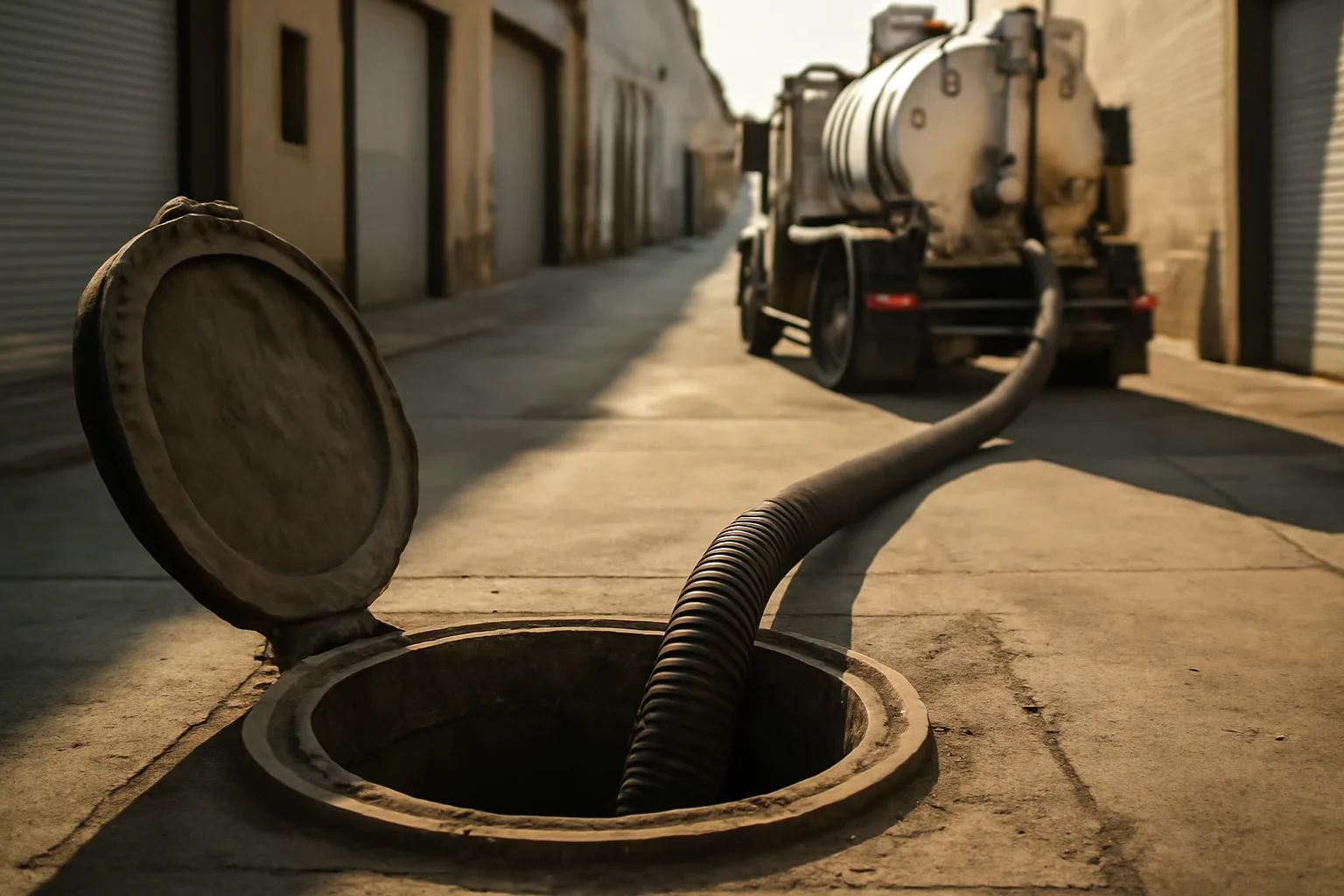
TL;DR
Arkansas requires grease trap pumping contractors to hold a Liquid Waste Transporter permit from the Arkansas Department of Health. Installation work on the trap itself needs a licensed plumber. You'll also need a business entity filing, local waste hauler registration, and a manifest for every pump-out. Plan on $500 to $2,500 in startup fees before your first job.
Do you need a license for grease trap work in Arkansas?
Yes, and it splits into two license tracks depending on what you're doing. Pumping and hauling the waste means you need a Liquid Waste Transporter (LWT) permit from the Arkansas Department of Health (ADH). Installing or repairing the trap means a licensed plumber has to do the work or supervise it. Doing either without the right credential exposes you to stop-work orders and civil penalties under Arkansas Code Annotated section 14-232, which governs solid waste management authority at the county level, plus ADH rules under Arkansas Plumbing Code authority. [1][2]
The LWT permit is the document most grease trap service companies actually chase. It lets a vehicle legally transport grease trap waste, which Arkansas classifies as non-hazardous special waste under Arkansas Pollution Control and Ecology Commission (APC&E) Regulation 22. [3] Without it, a single load of grease waste pulled from a restaurant trap is an unlicensed waste transport event. Inspectors do catch this at disposal sites.
Plumbers in Arkansas are licensed through the Arkansas Department of Health, Plumbing and Natural Gas Division. A journeyman or master plumber license is required to pull a plumbing permit for new grease interceptor installation. Some counties add a separate contractor registration on top. Confirm with your county assessor's office and with ADH at (501) 661-2623 before you assume your state license covers local requirements. [2]
What is the Arkansas Liquid Waste Transporter permit and who needs it?
The Liquid Waste Transporter (LWT) permit is the core credential for grease trap pumping businesses in Arkansas. ADH issues it under authority of the Arkansas Water and Air Pollution Control Act. It authorizes a named company and specific registered vehicles to collect and transport liquid waste, including grease trap and septic waste, to an approved disposal or treatment facility. [3]
Every truck in your fleet has to be listed on or covered by the permit. Add a vehicle mid-year and you have to update your permit before that truck runs. The permit is issued per company, not per driver, but drivers must carry a copy of the permit and a completed manifest for each load they haul.
Who falls under this? Any company doing scheduled restaurant grease trap pump-outs. Any portable restroom operator who pulls grease traps as a side service. Any plumbing company that hauls away the waste it removes during a repair. If you're only doing the installation and a licensed hauler picks up the waste, the LWT is their problem, not yours. But get that arrangement in writing in case ADH ever asks.
Learn how neighboring states structure similar requirements: see grease trap license in Alabama and grease trap license in Alaska for comparison.
How much does a grease trap license cost in Arkansas?
Arkansas LWT permit fees and plumbing license fees change on a regulatory cycle, so treat this as a reference, not a live fee schedule. Here are the ranges that have been publicly documented, with sources to verify each one.
The ADH Liquid Waste Transporter permit fee has historically been assessed per vehicle. Industry sources and public meeting records put the base fee in the range of $100 to $300 per permitted vehicle per year, but confirm the current figure directly with the ADH Plumbing and Natural Gas Division or the ADH Office of Environmental Health Services before you budget. [2][3]
Arkansas plumbing license fees (relevant if you're doing installation work) are set by the State Board of Health fee schedule. A plumbing contractor license examination fee and initial license fee have historically totaled roughly $150 to $400 depending on license class. Renewal fees are lower. [2]
Beyond state fees, the real first-year money is equipment and compliance overhead. A used vacuum truck capable of grease trap service starts around $15,000 to $40,000 in the secondary market, depending on tank size and pump condition. A new unit from an established manufacturer runs $60,000 to $120,000. Manifest books, PPE, and spill containment supplies add another few hundred dollars. Business entity registration with the Arkansas Secretary of State is $45 for an LLC as of the current fee schedule. [4]
| Cost Item | Estimated Range | Source to Confirm |
|---|---|---|
| LWT permit (per vehicle, annual) | $100 to $300 | ADH Environmental Health |
| Plumbing contractor license | $150 to $400 total | ADH Plumbing Division |
| AR LLC formation | $45 | Arkansas Secretary of State |
| Used vacuum truck | $15,000 to $40,000 | Secondary market, varies |
| New vacuum truck | $60,000 to $120,000 | Manufacturer quotes |
| Manifest books and compliance supplies | $200 to $600 | Varies by supplier |
These ranges are best estimates from public records and industry benchmarks. Treat them as planning inputs, not quotes. Confirm every state fee with the issuing agency before writing a check.
How long does getting a grease trap license take in Arkansas?
ADH does not publish a firm processing window for the Liquid Waste Transporter permit anywhere in its public documentation. Frustrating, but honest. Based on what applicants report in public forums and what similar state agencies publish, a complete LWT application with all required vehicle documentation, insurance certificates, and disposal site agreements typically processes in 4 to 8 weeks. Incomplete applications restart the clock. [3]
Plumbing license timing depends on whether you're testing for the first time or reciprocating from another state. Arkansas has a plumbing license exam administered by ADH, and exam dates are scheduled periodically. From exam registration to license issuance, the process has historically taken 6 to 12 weeks total when the applicant passes on the first attempt. [2]
Your fastest path to operational looks like this. File the LLC first (Arkansas SOS online filing often processes in 1 to 3 business days), then submit your LWT permit application with a fully insured vehicle on day two, then handle any local business licenses from your city or county (Little Rock and Fayetteville both require separate business licenses with their own timelines). The federal EIN from the IRS is same-day online. [4][5]
Nobody should promise you a specific processing date because ADH workloads vary. Build 10 to 12 weeks into your pre-opening timeline so a slow review cycle doesn't strand you with a truck and no permit.
What does the Arkansas grease trap permit application actually require?
The ADH LWT application packet is not complicated, but missing any single piece sends it back to you. Here's what the application typically asks for. [3]
First, company identification: your business name as registered with the Arkansas Secretary of State, your federal EIN, and a physical address for your principal place of business. A P.O. box alone is not enough.
Second, vehicle documentation for every truck you want covered: the vehicle's VIN, tank capacity in gallons, current registration, and a description of the type of waste each truck will carry. Grease trap waste (FOG, fats/oils/grease) must be identified specifically.
Third, proof of liability insurance. The policy must name the State of Arkansas and meet ADH minimum limits. Confirm current minimum limits with ADH, since they change. [3]
Fourth, a disposal site agreement or letter of acceptance from a licensed disposal or treatment facility showing they will accept your grease trap waste loads. This is the piece applicants forget most. You can't legally haul waste without a permitted place to take it.
Fifth, the application fee, submitted as specified in the current fee schedule.
Manifest requirements run parallel to the permit. Arkansas APC&E Regulation 22 requires a manifest for each load of special waste transported. The manifest must identify the generator, the transporter, the waste volume, and the disposal site. Keep completed manifests on file for the minimum period specified in the regulation. [3]
What local licenses and registrations do grease trap businesses need in Arkansas?
State credentials get you legal, but local governments in Arkansas add their own layer. Most cities with populations above 5,000 require a city business license, typically renewed annually, with fees ranging from $50 to $300 depending on business type and gross revenue brackets. Little Rock uses a gross receipts-based schedule. Fayetteville, Fort Smith, and Jonesboro each run their own systems. [6]
County health departments can also impose requirements for waste haulers operating within their jurisdictions under the authority granted by Arkansas Code Annotated section 14-232. Call the county health office in every county where you plan to operate, more than where you're headquartered.
Some municipalities run pretreatment programs under their NPDES permits that add record-keeping for grease trap haulers who service food establishments connected to city sewer. If the city's wastewater treatment plant is subject to an EPA pretreatment program, they may require you to submit manifests or load data to the city's pretreatment coordinator on top of keeping your own records. [7]
Several Arkansas cities publish pretreatment program documentation that references grease trap monitoring for food service establishments. Whether that extends to reporting by haulers is something you confirm with the city's water and sewer utility, not with this article. [7]
For comparison on how a neighboring state handles its local layer, the how to start grease trap in Arizona guide covers a different municipal pretreatment structure worth understanding.
What plumbing license does Arkansas require for grease interceptor installation?
Grease interceptor installation is a plumbing project in Arkansas. The Arkansas Plumbing Code, adopted under state law and administered by the ADH Plumbing and Natural Gas Division, requires that new interceptor installation be performed by or under the direct supervision of a licensed plumber. [2]
Two license classes matter here: journeyman plumber and master plumber. A journeyman can do the work under supervision. A master plumber is required to pull the plumbing permit from the local authority having jurisdiction (AHJ), usually the city or county building department. Without a master plumber pulling the permit, the installation is unpermitted, which creates liability for both the contractor and the property owner.
Plumbing contractors running a business in Arkansas also typically need a contractor's license if they're bidding jobs above certain dollar thresholds. The Arkansas Contractors Licensing Board handles that track separately from ADH's plumber licensing. Check both. [8]
Entering the market as an installation-only business? Partnering with a master plumber (or hiring one as an employee) is faster than waiting to test for the license yourself. That's what most small operators do in their first year.
How does Arkansas's FOG regulation affect grease trap service businesses?
FOG stands for fats, oils, and grease. Arkansas doesn't have a single statewide FOG ordinance the way some states do. It works through a combination of EPA general pretreatment regulations and individual municipal pretreatment programs adopted by cities running their own wastewater treatment plants. [7][9]
EPA's general pretreatment regulations, at 40 CFR Part 403, require publicly owned treatment works (POTWs) above a certain size to develop pretreatment programs. Those programs set local limits for grease discharged by food service establishments, and they require the POTWs to inspect grease traps, review service records, and set pump-out schedules. [9]
As the service contractor, you benefit from this framework because it creates mandatory demand. Restaurants in municipalities with active pretreatment programs must pump on schedule and document it with a manifest. That manifest is your service record, and local pretreatment inspectors will ask to see it.
Arkansas also points to EPA's guidelines for grease interceptor sizing in its plumbing code. The common program standard holds that interceptors must be maintained so effluent discharged to the public sewer contains no more than 100 mg/L of FOG, a number that appears in grease control program documents and is consistent with EPA guidance. [9] Confirm the specific local limit with the relevant municipal pretreatment coordinator, because local limits can be stricter than the federal reference point.
This regulatory pressure is good for your revenue stability. Your customers can't skip pump-outs without violating their own permits.
What insurance does a grease trap business need in Arkansas?
The ADH LWT permit requires proof of liability insurance, but the minimum limits are set by ADH and change. Beyond the permit minimum, running a liquid waste transport business without adequate coverage is genuinely dangerous for business continuity. [3]
Most grease trap operators carry commercial general liability (CGL) at $1 million per occurrence and $2 million aggregate as a starting point. If your truck is on the road, commercial auto insurance is required by Arkansas law for any commercial vehicle over a certain gross vehicle weight rating (GVWR), and a vacuum truck will almost always clear that threshold. [10]
Pollution liability is the coverage carriers argue about most. Grease trap waste is classified as non-hazardous, but a spill on a public road or into a waterway can trigger environmental cleanup costs that a standard CGL policy excludes under its pollution exclusion clause. Contractors' pollution liability (CPL) coverage is worth asking a commercial insurance broker about before your first haul.
Workers' compensation is required in Arkansas if you have three or more employees. With fewer than three, it's technically not mandated, but operating without it when you have employees handling waste by hand is a serious financial risk.
Get at least three quotes from brokers who specifically write commercial environmental or waste contractor accounts. A broker who mostly does general contractors may not know what CPL endorsements exist for your category.
What paper records does an Arkansas grease trap operator need to keep?
Record-keeping requirements come from two directions: the LWT permit conditions and any municipal pretreatment program requirements in the areas you serve.
The LWT permit, under APC&E Regulation 22, requires a manifest for each waste transport event. The manifest documents the generator (restaurant or commercial kitchen), the volume pumped, the transporter (you), and the disposal facility. Retain completed manifests for the period specified in your permit conditions, often a minimum of three years. [3]
Municipal pretreatment programs may require you to submit copies of manifests to the city's pretreatment coordinator on a schedule (monthly or quarterly is common). Some require you to register as an approved hauler with the city's wastewater utility before you can service establishments connected to that city's sewer.
Vehicle inspection records, maintenance logs, and insurance certificates should also stay on file. An ADH compliance inspection can ask for any of these.
If you work with a paper manifest system and want to make sure your forms actually meet ADH requirements, GreaseTrapPath's Interceptor and Manifest Kit at /start includes a state-specific manifest template built against the Regulation 22 requirements as a starting point, not a legal guarantee. Review it against your actual permit conditions.
For a full first-year operational checklist in a nearby state, the how to start grease trap in California guide covers a more complex version of the same system.
What are the biggest mistakes new Arkansas grease trap operators make?
The most common mistake is hauling waste before the LWT permit is in hand. The assumption is that once the application is submitted, operations can start. ADH does not see it that way. Permit in hand before first haul.
Second most common: skipping the disposal site agreement. You cannot get the permit without proving you have an approved facility to take your loads. Lining up that agreement first, before you even start the application, saves weeks.
Third: operating in a city that requires a separate hauler registration with the wastewater utility without actually registering. Little Rock and several other Arkansas cities with pretreatment programs maintain approved hauler lists, and they do check manifests against those lists during facility inspections. Land on the unapproved list and the restaurant could be cited for using you, which ends your relationship with that customer fast.
Fourth: underinsuring the truck. A standard commercial auto policy that ignores pollution liability leaves the operator exposed on any spill event, even a minor one.
Fifth: not tracking manifest copies. You need originals or copies retained per permit conditions. Losing manifests isn't an administrative inconvenience. It's a permit violation.
The how to start grease trap in Arkansas guide covers the full operational launch sequence if you want the step-by-step version alongside the licensing framework here.
Where do you apply for the Arkansas grease trap permits and who do you call?
For the Liquid Waste Transporter permit, contact the Arkansas Department of Health, Office of Environmental Health Services. Their phone line is (501) 661-2623. Applications go to the ADH central office in Little Rock. Download the current application form directly from the ADH website rather than using a form you found somewhere else, because versions change. [3]
For plumbing licenses, the ADH Plumbing and Natural Gas Division handles both exam scheduling and license issuance. The contact number is (501) 661-2770. [2]
For business entity registration, use the Arkansas Secretary of State's online filing portal. LLC formation is $45 as of the current fee schedule, payable online. [4]
For local business licenses, contact your city clerk's office or the municipal finance department. In Little Rock, that's the City Clerk's office. In Fayetteville, it's the City Clerk and the Utilities Department if pretreatment applies. For county-level requirements, start with the county judge's office or county health department.
For EPA pretreatment program questions, the EPA Region 6 office in Dallas covers Arkansas. Their general line is (214) 665-2200. [9]
Keep a file with every application number, submission date, contact name, and phone number. When you call to follow up on an application, be the operator who has the reference number ready, not the one asking them to look you up by name.
If you're comparing this state's structure to another state before deciding where to launch, see grease trap license in Arizona and grease trap license in California.
GreaseTrapPath's document kit at /start includes fillable manifest templates and a pre-application checklist you can work through before your first call to ADH.
Frequently asked questions
Do you need a license for grease trap pumping in Arkansas?
Yes. Any company transporting grease trap waste in Arkansas must hold a Liquid Waste Transporter (LWT) permit from the Arkansas Department of Health. The permit covers your business and must list every vehicle in your fleet. Operating without it is a violation of Arkansas pollution control regulations. Confirm current application requirements directly with ADH at (501) 661-2623.
How much does a grease trap license cost in Arkansas?
The LWT permit fee has historically run $100 to $300 per vehicle per year based on public records, but ADH sets the current rate and it can change. Add $45 for LLC formation with the Arkansas Secretary of State and $150 to $400 for a plumbing license if you're doing installations. Total first-year state fees typically land between $300 and $700 before equipment and insurance costs.
How long does it take to get a grease trap license in Arkansas?
ADH does not publish a firm processing window. Based on applicant reports and comparable state programs, a complete LWT permit application takes roughly 4 to 8 weeks to process. Incomplete applications go back to you and restart the clock. Build 10 to 12 weeks into your pre-launch timeline to account for any review delays at ADH.
Who issues the grease trap transporter permit in Arkansas?
The Arkansas Department of Health, Office of Environmental Health Services, issues the Liquid Waste Transporter permit under authority of the Arkansas Water and Air Pollution Control Act and APC&E Regulation 22. Their main contact number is (501) 661-2623. Applications go to the ADH central office in Little Rock.
Does Arkansas require a plumbing license to install a grease interceptor?
Yes. Grease interceptor installation is a plumbing project under the Arkansas Plumbing Code. A licensed plumber must perform or directly supervise the work, and a master plumber must pull the permit from the local authority having jurisdiction. The ADH Plumbing and Natural Gas Division at (501) 661-2770 handles licensing and exam scheduling.
What is APC&E Regulation 22 and why does it matter for grease trap businesses?
APC&E Regulation 22 is the Arkansas Pollution Control and Ecology Commission's solid and liquid waste rule. It classifies grease trap waste as a non-hazardous special waste and requires Liquid Waste Transporter permits, manifest documentation for every load, and disposal only at permitted facilities. It's the foundational compliance document for any grease trap pumping business in the state.
Do you need a manifest for every grease trap pump-out in Arkansas?
Yes. APC&E Regulation 22 requires a manifest for each load of special waste transported, including grease trap waste. The manifest must identify the waste generator, the transporter, the volume, and the disposal facility. Keep completed manifests for the retention period specified in your permit conditions, typically at least three years.
Do Arkansas cities require grease trap haulers to register separately from the state permit?
Some do. Cities with municipal pretreatment programs, including several larger Arkansas municipalities, maintain approved hauler lists and may require separate registration with their wastewater utility. Restaurants in those cities can only use haulers on the approved list. Contact the wastewater or utility department in each city where you plan to operate before starting service there.
What insurance does a grease trap business need in Arkansas to get the LWT permit?
The ADH LWT permit requires proof of liability insurance meeting ADH minimum limits, which you must confirm with ADH because limits change. Most operators also carry commercial auto coverage for their vacuum truck, and a contractors' pollution liability policy is worth considering because standard general liability policies often exclude pollution events, even from non-hazardous waste.
Can a sole proprietor get a grease trap transporter permit in Arkansas?
Yes, business structure alone doesn't disqualify you. You still need to register your business name, obtain a federal EIN, carry the required insurance, and meet all permit requirements. That said, operating as an LLC rather than a sole proprietorship provides personal liability protection, which matters significantly in liquid waste transport where spill liability is real. LLC formation costs $45 with the Arkansas Secretary of State.
What disposal sites can Arkansas grease trap haulers use?
Grease trap waste must go to a facility permitted to accept it under Arkansas and EPA regulations. This includes licensed wastewater treatment plants with approved receiving agreements, licensed land application sites, and certain licensed industrial facilities. You need a written disposal agreement with an approved site before ADH will issue your LWT permit. Confirm which facilities accept FOG waste in your region before you apply.
Does Arkansas have a statewide grease trap pump-out frequency requirement?
Arkansas does not have a single statewide mandatory pump-out schedule. Individual municipalities with pretreatment programs set their own frequency requirements for food service establishments, often based on trap size and flow rate. The common industry standard is pumping when the trap is 25% full of accumulated grease and solids, which many local programs reference, but confirm the specific rule with each city's pretreatment coordinator.
How is grease trap waste classified in Arkansas?
Grease trap waste is classified as a non-hazardous special waste under APC&E Regulation 22. This means it doesn't require hazardous waste manifests or licensed hazardous waste haulers, but it does require the standard liquid waste transporter permit and special waste manifest for each load. The classification simplifies permitting compared to hazardous waste but does not eliminate the requirement for a permit.
What happens if you haul grease trap waste in Arkansas without a permit?
Hauling liquid waste without a valid LWT permit is a violation of APC&E Regulation 22 and the Arkansas Water and Air Pollution Control Act. ADH can issue cease-and-desist orders, civil penalties, and refer egregious cases for criminal prosecution. Disposal facilities that are themselves permitted may refuse loads from unpermitted haulers and report the incident to ADH.
Sources
- Arkansas Legislature, Arkansas Code Annotated section 14-232: Arkansas Code Annotated section 14-232 governs solid waste management authority at the county level
- Arkansas Department of Health: ADH Plumbing and Natural Gas Division licenses plumbers and administers the Arkansas Plumbing Code requiring licensed plumber supervision for grease interceptor installation
- Arkansas Department of Health: ADH issues Liquid Waste Transporter permits under APC&E Regulation 22 for transport of grease trap and other special liquid waste, requiring vehicle listing, insurance, disposal site agreement, and manifest for each load
- Arkansas Secretary of State, Business and Commercial Services, Filing Fees: Arkansas LLC formation fee is $45 payable to the Arkansas Secretary of State
- IRS, Employer Identification Number (EIN) Online Application: Federal EIN is available same-day through the IRS online application
- City of Little Rock, Arkansas: City of Little Rock requires a city business license for businesses operating within the city, with fees on a gross receipts-based schedule
- Arkansas Contractors Licensing Board: Arkansas Contractors Licensing Board administers contractor licensing separate from ADH plumber licensing for businesses bidding construction or installation work above applicable thresholds
- U.S. EPA, General Pretreatment Regulations, 40 CFR Part 403: EPA's general pretreatment regulations at 40 CFR Part 403 require POTWs above certain size thresholds to develop pretreatment programs setting local limits for grease discharged by food service establishments
- Arkansas Department of Finance and Administration, Motor Vehicle Division: Commercial vehicles operating in Arkansas above applicable GVWR thresholds require commercial auto insurance under Arkansas law