Last updated 2026-08-21
TL;DR
A grease trap is a tank that holds kitchen wastewater long enough for fats, oils, and grease to float and solids to sink. You start by asking the local sewer or septic board whether you need one, what sizing method they accept, and what registration they want. Then a licensed installer sets a listed or calculated unit with open lids, and a licensed hauler starts tickets before opening day. Confirm every fee with that board.
What is a grease trap?
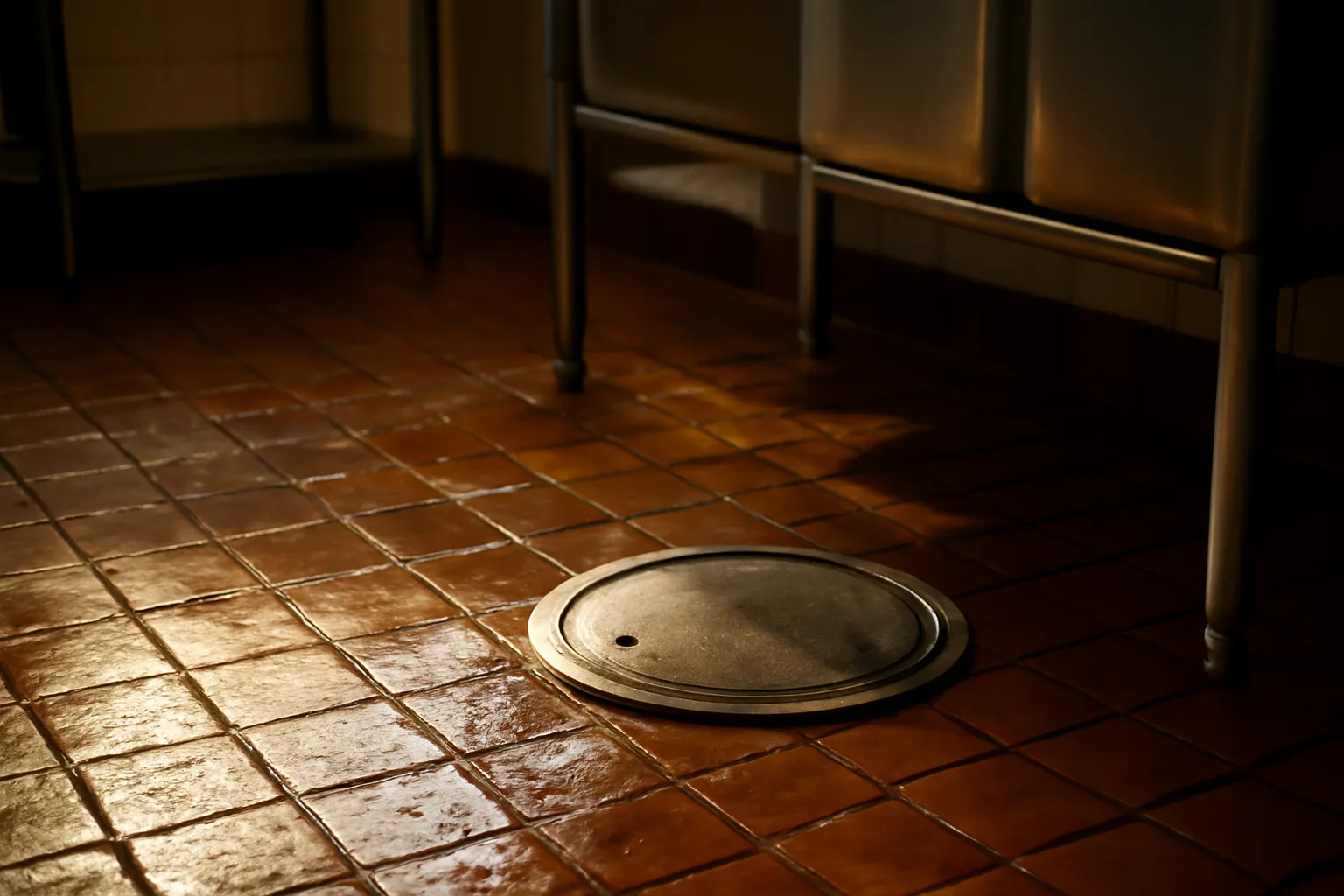
A grease trap is a tank or box that slows kitchen wastewater so fats, oils, and grease float and food solids sink, instead of coating the public sewer or a septic field. That is the whole job. Cities care because cooled FOG (fats, oils, grease) hardens in pipes and helps cause backups.
Most cooks say grease trap for the small indoor unit under a three-compartment sink. Many plumbing codes call the big outdoor tank a grease interceptor. Same physics. Different volume, different truck, different inspection habit. If a form asks for one word, use the word that ordinance prints.
Federal pretreatment rules do not license your cafe by name. They ban "Solid or viscous pollutants in amounts which will cause obstruction to the flow in the POTW resulting in Interference." That sentence is 40 CFR 403.5(b)(3). Local FOG programs turn it into interceptor rules and hauler tickets. [1]
Food grease is not motor oil. Petroleum oil sits in a different prohibition at 40 CFR 403.5(b)(6). Keep yellow grease (fryer oil you sell to a renderer) out of the interceptor. Keep engine oil out of both. [1]
EPA's pretreatment manual treats FOG as a routine collection-system problem, not a boutique kitchen issue. The 2011 Introduction to the National Pretreatment Program walks how publicly owned treatment works set local limits and industrial user controls so pipes and plants keep working. Your trap is the kitchen end of that chain. [3]
Learn the local acronyms. HGI means hydromechanical grease interceptor, usually indoor and flow-rated. GGI means gravity grease interceptor, usually outdoor and volume-rated. Some boards still stamp grease trap on every page. Ask the pretreatment coordinator which term they want on the application, then repeat that term forever.
How do you start grease trap work the first year?
Find the agency that owns the sewer or the septic rules first. Do not buy a tank yet. Call the city pretreatment or FOG desk. If you are on a septic system, call county health. Ask whether you need an interceptor, which sizing method they accept, and which registration they want before wastewater hits the unit. Confirm fees with that board. Nobody here can promise a processing time.
Then hire a licensed plumber or installer who already pulls permits in that jurisdiction. I would not mail-order a box and hope. Many cities want an indoor unit listed to PDI-G101 or ASME A112.14.3, or an outdoor tank sized by their worksheet. A catalog page is not an approval.
Pull the plumbing permit. If the city runs a FOG registration, file that too. Set the unit so lids open without moving a range. The FDA Food Code is blunt: "If used, a grease trap shall be located to be easily accessible for cleaning, operation, and maintenance." [2]
Book a licensed hauler before opening day. Construction dust and first-week oil often force an early pump. Keep that first ticket with an as-built sketch and a photo of the data plate.
Still choosing a trade? The paper load sits closer to liquid-waste work than to line cooking. Read grease trap vs nearby career before you spend on tools. For a side-by-side of trap types people confuse, grease trap guide 12 is the next useful stop.
Skip enzyme subscriptions, miracle tabs, and "never pump again" pitches until you have six months of real tickets. Physical removal is what boards still ask to see.
Who requires a grease trap and who does not?
Most food service shops that cook or wash greasy ware need a grease trap. The trigger is the wastewater, not the trade name on the awning. A bakery that scrubs sheet pans can need one. A packaged-goods counter with no food-prep sink may not. Confirm with the board that will inspect you.
The International Plumbing Code, Chapter 10, requires interceptors and separators where FOG or other harmful wastes will discharge, then leaves sizing and exceptions to the local code official. Cities amend that chapter constantly. Read their amendment, not a national blog. [6]
On-site septic is a different statute pile. Massachusetts Title 5 (310 CMR 15.000) requires grease traps at restaurants, nursing homes, schools, hospitals, and other facilities expected to discharge quantities of grease, and it sets design floors that do not apply to every city interceptor. If you are on a sewer, do not copy septic gallon numbers and call it done. [7]
California's statewide sanitary sewer order (WQ 2022-0103-DWQ) pushes collection-system agencies to run FOG control programs. That is how a local "install an interceptor" rule shows up even though EPA never handed your cafe a federal grease license. [11]
Texas cities borrow TCEQ FOG assistance and then write their own ordinances. That published state page is where the reused language starts. The real local form still lives on your own city's public works site, not on a national myth thread. [10]
I do not treat coffee-only shops as automatically exempt. Espresso plus a pastry oven plus a pot sink has surprised more than one owner. Ask. Get the answer in writing if the clerk says you are exempt.
Is a grease trap the same as a grease interceptor?
In the kitchen, people use the words as synonyms. In the code book, they often are not. A grease trap usually means the smaller indoor hydromechanical unit. A grease interceptor usually means the larger outdoor gravity tank. Some ordinances flip the words. Match the ordinance.
Hydromechanical units use internal baffles and a flow-control device to buy short detention time in a small footprint. Gravity tanks use volume and quiet water. Both fail if you treat them like a trash can.
| Type | Typical spot | How boards size it | Who services it | First-year failure I see |
|---|---|---|---|---|
| Indoor hydromechanical (HGI) | Under a pot sink or in a closet | Flow in gpm plus grease capacity, often a listed rating | Small vacuum route or FOG hauler | Missing flow control, lids blocked by equipment |
| Outdoor gravity (GGI) | Yard or driveway, in-ground | Detention volume or fixture worksheet | Septage or FOG truck | Buried lids, 25% rule ignored, stormwater inlets |
Wisconsin SPS 382.34 is one state plumbing chapter that treats interceptors as designed devices, not as leftover drums. If you work there, read that section before you order steel. [8]
Do not buy a used tank unless the board says they will accept it and you can prove integrity. A cracked baffle is a silent bypass. Cheap on day one, loud on inspection day.
If you want more type-by-type comparison writing from this desk, grease trap guide 24 and grease trap guide 36 stay on that fork.
How do you size a grease trap without guessing?
Size it with the method the inspecting board already uses. That is the only size that matters. Indoor hydromechanical units are usually picked by flow rate (gallons per minute) and rated grease capacity. Outdoor gravity tanks are usually picked by detention volume or a fixture-unit worksheet.
IPC Chapter 10 points you at interceptor tables and the code official. Local amendments overwrite the table. Use their worksheet if they hand you one. Fighting their method to save one tank size is a waste of money. [6]
Massachusetts Title 5 on-site grease traps are a different animal. Those tanks are built for septic systems, with a common minimum capacity of 1,000 gallons and a minimum liquid depth of four feet, plus a detention idea that does not map cleanly onto a downtown hydromechanical box. If you are on city sewer, do not install a Title 5 number and assume you are done. [7]
Wisconsin SPS 382.34 walks interceptor design inside the state plumbing code. Other states hide the same ideas in their adopted IPC or UPC amendments. I read the state chapter and the city FOG handout together. One without the other is how people buy the wrong lid. [8]
Measure actual fixture flow if the board allows it. A 50 gpm rating on a sink that never sees 20 gpm is not heroic. It is just oversized steel you will still have to pump. Undersizing to save a few hundred dollars is worse. The unit will blow grease downstream and you will buy the larger tank anyway.
Confirm listing marks (PDI, ASME, or whatever that city named) on the data plate before the inspector arrives. Photograph the plate. File the photo. Plates paint over.
What permits and paper come before the first service?
The usual stack is a plumbing permit, a FOG or interceptor registration if the city runs one, and sometimes a wastewater discharge permit for larger kitchens. Septic sites add health-department construction and use approvals under the state environmental code. Confirm the current form names and fees with the board. I will not invent a fee or a wait time.
TCEQ posts FOG assistance that Texas cities reuse when they write ordinances. That state page is one document I would open early if I were opening in Texas, then I would still call the local desk because annexations and special districts change who answers the phone. [10]
California collection systems operating under WQ 2022-0103-DWQ are supposed to keep FOG control in their sewer management plans. Your city may therefore demand an interceptor even if your county health card never mentioned one. Ask both offices. [11]
I keep a simple interceptor file: data-plate photo, as-built sketch, every hauler ticket, and the last inspection letter. If you want that stack pre-built, GreaseTrapPath sells a $199 one-time Interceptor + Manifest Kit. A blank folder works too.
Do not open the doors with an empty file and a verbal "the plumber said we're fine." Boards ask for paper. Verbal is not paper.
For how other guides on this desk split permit talk from equipment talk, grease trap guide 48 is a clean next click.
How often do you pump a grease trap?
Pump when the board's rule says pump, not when the smell gets ambitious. Massachusetts Title 5 requires monthly inspection of on-site grease traps and cleaning by a licensed septage hauler when grease reaches 25% of effective depth or at least every three months, whichever is sooner. That 25% figure is the number I would write on the inside of the lid if I worked a Title 5 site. [7]
Many sewer cities copy some version of the 25% rule. Some add a 90-day ceiling. Some only care about the percentage. Read your ordinance. Do not import Massachusetts into a city that never adopted it.
Indoor hydromechanical units often need more frequent attention than a 1,000 gallon outdoor tank. Short detention plus heavy fryer work fills a small box fast. Weekly scraping of the top layer is house work, not a substitute for a full pump if the board requires a licensed hauler.
I use a sludge judge or the hauler's measurement and I write the percentage on the ticket. "Looked fine" is not a measurement. Inspectors know the difference.
EPA's 2004 Report to Congress on CSOs and SSOs is old, and it is still the federal document people cite when they say grease, roots, and debris show up again and again in overflow cause lists. Pumping is cheaper than a backup into the dining room. [4]
If your tickets show you hitting 25% in four weeks, the unit is too small or the kitchen is dumping oil. Fix the habit before you buy enzymes.
What does first-year grease trap work actually cost?
There is no honest national price. Permit fees, impact fees, and FOG registration charges are local and they move. Confirm them with the board that will cash the check. I will not invent a current fee.
The big first-year checks are the tank or listed unit, the plumber, any excavation for an outdoor interceptor, and a hauler contract. Outdoor gravity tanks cost more to set and less (per gallon) to pump. Indoor units cost less to set and can cost more in frequent service. Run both quotes against the sizing method the city already chose.
Hauler rates swing with tank size, access, distance to the disposal plant, and whether the load is heavy grease or watery. Ask for a price that includes disposal, more than the truck roll. Ask whether after-hours or blocked-lid jobs cost extra. Get it on the quote.
I treat enzyme and bacteria subscriptions as optional until tickets prove a process problem. Most FOG programs still want physical removal. Paying monthly for a jug while the 25% line climbs is a waste of money.
Insurance is its own pile. A kitchen interceptor leak is a slip and a cleanup, not a romance. Talk to the same agent who already writes the food-service policy. Do not let a tank vendor sell you a policy you cannot read.
Used equipment looks cheap until the inspector rejects the listing or the baffles are gone. I would rather buy a smaller new listed HGI than a mystery outdoor tank with no as-built.
What records do inspectors ask to see?
They ask for proof the unit exists, proof it is the size they approved, and proof a licensed hauler has been emptying it on the schedule the ordinance named. That usually means tickets with date, gallons or percent full, hauler name, hauler license, and the disposal facility. Keep them in date order.
Photograph the data plate and the open lids after every pump if you can do it safely from outside the tank. Never climb in. OSHA's permit-required confined space standard (29 CFR 1910.146) is the federal reason people die in tanks that "only needed a quick look." The grease trap is a confined space. Stay out. [5]
FDA Food Code 5-402.12 is about access, not about your filing cabinet, but inspectors still use access as a proxy for whether you have been cleaning the thing. A trap under a bolted cabinet fails the access sentence before they even ask for tickets. [2]
If you are a significant industrial user under 40 CFR 403, the paper pile gets heavier (permits, self-monitoring, slug control). Most cafes are not SIUs. Your POTW still has local FOG authority. Do not ignore the local form because you are "just a restaurant." [1] [3]
I keep one year on site and older tickets off site. Some cities name a retention period. Follow theirs.
grease trap guide 60 is the comparison piece I send people who want to see how record habits differ across nearby setups.
What happens if you skip the trap or lose the tickets?
The kitchen line backs up, or the city's line backs up, and you pay for whoever's carpet got involved. FOG is a classic blockage material. EPA's 2004 CSO/SSO report is still the long federal write-up that puts grease next to roots and debris in overflow cause talk. Local spill reports are uglier and more current. [4]
The legal hook at the plant is still 40 CFR 403.5. Solid or viscous pollutants that obstruct the POTW are prohibited. Your city ordinance is the document that names the fine, the re-inspection fee, and whether they can shut off water. Confirm those numbers with the city. They change. [1]
Lost tickets look like skipped pumps. If the hauler can reissue from their archive, do that the same week. If they cannot, you have a gap. Some boards accept a letter from the hauler. Some do not. Ask before you invent a spreadsheet.
Skipping the trap entirely (straight-piping the pot sink) is how people meet enforcement staff on a bad day. I would not do it for a pop-up, a food truck commissary, or a "temporary" patio kitchen either. Temporary has a way of lasting a year.
Collection systems under California's WQ 2022-0103-DWQ are supposed to hunt FOG hot spots. That raises the odds a city crew already knows which block has the problem restaurants. You are not invisible. [11]
How do you pick a hauler and read a manifest?
Pick a hauler who is licensed for FOG or septage in that state, who will give you a ticket every visit, and who will name the disposal facility. Cash-only, no-paper outfits are a problem you are buying for yourself.
Read the ticket before the truck leaves. Date, address, gallons or percent, driver, company license, disposal site. If the percent full is blank, make them write it. That number is how you prove the 25% rule later. [7]
Ask where the load goes. "A farm" is not an answer. FOG from a restaurant interceptor is not automatically farm-ready. Legal disposal plants issue incoming load receipts. Your hauler should be able to name the plant.
Never enter the interceptor to "help." 29 CFR 1910.146 is the confined-space rule. Toxic gases and drowning are the boring reasons. Stand at the lid. Let the vacuum hose work. [5]
I want a written route schedule and a cancellation rule. Opening week and holiday weeks are when shops get skipped. Put the next date on a wall calendar the ticket can match.
Yellow grease (used fryer oil in a closed rendering barrel) is a different hauler and a different manifest. Do not pour it into the interceptor to "make one stop." You just spent the interceptor's capacity on oil you could have sold.
If you want a longer comparison of service models, grease trap guide 72 is the later piece in this series.
What first-year mistakes waste money?
Putting the stove on the lid is the classic one. The FDA access sentence exists because inspectors and haulers cannot clean what they cannot open. Move the equipment once, or live with a failed inspection loop. [2]
Trusting enzymes to replace pumping is next. If the ordinance says a licensed hauler and 25% or 90 days, the jug is not a variance. Spend that money on the truck. [7]
Skipping the flow-control device on a hydromechanical unit lets the sink blast through the box. Grease goes downstream. You still paid for the unit.
Mixing roof drains or wash-down water into an outdoor gravity tank fills it with rain. You then pay to pump rain. Cap illegal inlets.
Opening without a hauler already booked. The first week of a new fryer line is messy. An empty vendor list on day five is how grease hits the city main.
Copying another state's gallon number because a forum said "everyone uses 1,000." Title 5's 1,000 gallon floor is for on-site systems in Massachusetts, not a national kitchen law. Confirm with the relevant board. [7]
This site is not a law firm and not a pumping company. I would call the FOG desk, then the plumber, then the hauler, in that order. The kit lives at /start if you want forms bundled. This guide stands without it.
Frequently asked questions
What is grease trap?
A grease trap is a tank that slows kitchen wastewater so fats, oils, and grease float and solids sink. Indoor boxes under a pot sink and outdoor gravity tanks use the same idea at different sizes. Local sewer or septic rules decide whether you need one. Confirm the term your ordinance uses.
How do you start grease trap?
Call the city FOG or pretreatment desk, or county health if you are on septic. Ask if you need a unit, which sizing method they accept, and which registration to file. Hire a licensed installer, pull the plumbing permit, keep lids openable, and book a licensed hauler before opening day. Confirm fees with that board.
Is a grease trap the same thing as a grease interceptor?
In speech, yes. In many codes, no. Trap often means a small indoor hydromechanical unit. Interceptor often means a large outdoor gravity tank. Some cities flip the words. Use the word printed on your local form so the application and the inspection card match.
Do I need a grease trap for a coffee shop?
Maybe. If you only rinse cups into a bar sink with no food prep, some boards exempt you. A pastry oven, grill, or pot sink usually trips the requirement. Ask the FOG desk in writing. Do not assume a drink-heavy menu is an automatic pass.
What is the 25% rule for grease traps?
It is a pump trigger. Massachusetts Title 5 tells licensed haulers to clean an on-site grease trap when grease hits 25% of effective depth, or at least every three months, whichever comes first, plus monthly inspections. Many sewer cities copy a version of that percentage. Read your ordinance before you adopt it.
Can I clean my own grease trap?
Some cities let staff skim an indoor unit. Many require a licensed hauler for a full pump-out, especially outdoor tanks. Title 5 sites need a licensed septage hauler. Never enter the tank. OSHA treats it as a confined space. Confirm who is allowed to service yours with the local board.
Do enzymes replace grease trap pumping?
Not if your ordinance requires physical removal on a percent-full or calendar rule. Enzymes may change odors. They do not create a variance. I would not buy a subscription until tickets show a problem a chemical could even touch. Spend first on the hauler and on not dumping fryer oil in the sink.
Do food trucks need grease traps?
The truck itself may use a small holding tank. The commissary kitchen where you wash pans usually needs a full interceptor under the same FOG rules as any other food service. Ask both the health department that licenses the truck and the city that owns the commissary sewer.
What is FOG in a sewer program?
FOG means fats, oils, and grease from kitchens. Cooled FOG sticks to pipes and helps cause sanitary sewer overflows. EPA pretreatment rules ban viscous pollutants that obstruct a POTW. Cities answer with interceptor rules, hauler manifests, and FOG control plans. Your trap is the kitchen end of that program.
How do I find my local FOG program?
Search the city public-works or water-utility site for FOG or grease interceptor. If you are on septic, start with county health and the state on-site code. TCEQ's FOG assistance page is a large state example. Then call. Special districts and annexations change who actually inspects you.
Can I install a used grease trap?
Only if the board says they will accept it and you can prove the listing, baffles, and watertight shell. A used outdoor tank with no as-built is how people fail the first inspection. I would buy a new listed indoor unit before I gambled on a mystery in-ground tank.
What is a grease interceptor manifest?
It is the hauler ticket that records date, location, volume or percent full, company license, and disposal site. Inspectors treat that paper as proof you pumped on time. Keep tickets in date order. If a load receipt is missing, ask the hauler to reissue from their archive the same week.
Sources
- eCFR 40 CFR 403.5 National pretreatment standards: Prohibited discharges: Federal pretreatment rules prohibit solid or viscous pollutants in amounts that cause obstruction and interference at a POTW, and separately limit petroleum oil that causes interference or pass through.
- FDA Food Code 2022, §5-402.12 Grease Trap: If used, a grease trap shall be located to be easily accessible for cleaning, operation, and maintenance.
- EPA Introduction to the National Pretreatment Program (2011): EPA's pretreatment manual explains how POTWs use local limits and industrial user controls to keep collection systems and plants working, which is the federal frame local FOG programs sit inside.
- EPA Report to Congress: Impacts and Control of CSOs and SSOs (2004): EPA's long federal write-up on sanitary sewer overflows discusses grease among commonly reported blockage materials along with roots and debris.
- OSHA 29 CFR 1910.146 Permit-required confined spaces: Entering a grease interceptor is confined-space work under the federal permit-required confined space standard.
- International Plumbing Code 2021, Chapter 10 Traps, Interceptors and Separators: IPC Chapter 10 requires interceptors where FOG or other harmful wastes will be discharged and points sizing to code tables and the local official.
- Massachusetts 310 CMR 15.000 Title 5 (State Environmental Code): Title 5 requires grease traps at facilities expected to discharge quantities of grease, sets common 1,000 gallon and four-foot design floors for those on-site tanks, and requires monthly inspection plus cleaning at 25% of effective depth or at least every three months.
- Wisconsin SPS 382 Plumbing design interceptors (SPS 382.34): Wisconsin's plumbing code includes interceptor and catch basin design requirements used to size and install grease interceptors in that state.
- TCEQ Fats, Oils and Grease assistance: The Texas Commission on Environmental Quality publishes FOG assistance that cities and food service shops use when writing or following local interceptor rules.
- California State Water Board WQ 2022-0103-DWQ Statewide General WDRs for Sanitary Sewer Systems: California's statewide sanitary sewer order requires collection-system agencies to include FOG control in sewer system management, which drives local interceptor programs.